
A US‑based Ed‑Tech platform approached us last year with a pressing need: proper accessibility testing. The team had serious concerns about their obligations under the Americans with Disabilities Act (ADA) and the growing emphasis on digital inclusion. They knew they needed to improve their website but felt overwhelmed—and didn’t know where to start.
They searched for effective accessibility testing services and clear guidance to ensure ADA compliance. However, they lacked a structured approach. That’s where our work began.
So, what was our goal?
We wanted to do more than run a simple WCAG audit. Instead, we aimed to help them truly understand inclusive design—seeing it as part of good product development, not just a checkbox exercise. In other words, we turned accessibility testing into a team-wide capability.
Before We Got Involved: Website Audit Challenges Without Proper Accessibility Testing
Previously, the team treated inclusive design as a last‑minute task right before launch. They would run a quick automated scan, fix whatever popped up, and call it done. This approach was far from a proper website audit or thorough accessibility testing for web applications.
Challenges They Were Facing with WCAG Compliance Testing
- Understanding what WCAG failures actually mean for real people
- Knowing who benefits when you fix those failures
- Learning how to make inclusive practices part of daily design, development, and QA work
The Real Problems: Gaps in Their Accessibility Audit Process
- Always a last‑minute scramble before releases
- Heavy reliance on automated tools that miss over 60% of issues without proper gap analysis
- Zero plan for what comes after an audit
What We Did Differently: Our Accessibility Testing Approach
We started with a proper WCAG audit but spent equal time explaining each finding. For example: “Here’s a color contrast failure—here’s what it means for someone with low vision.” This made our accessibility testing services more understandable for their entire team.
The game changer? We brought in a tester with lived experience. Having someone who actually uses a screen reader test their platform through real screen reader testing proved eye‑opening. Their feedback caught issues that our automated tools completely missed. Consequently, our accessibility testing revealed problems no scan could ever find.
The Results: Inclusive Design Improvements from Targeted Accessibility Testing
- Discovered critical issues that automated scans overlooked
- Teams finally understood why inclusive design truly matters
- Built a sustainable process, not just a one‑time fix
The Impact: For This Ed‑Tech Platform After Accessibility Testing
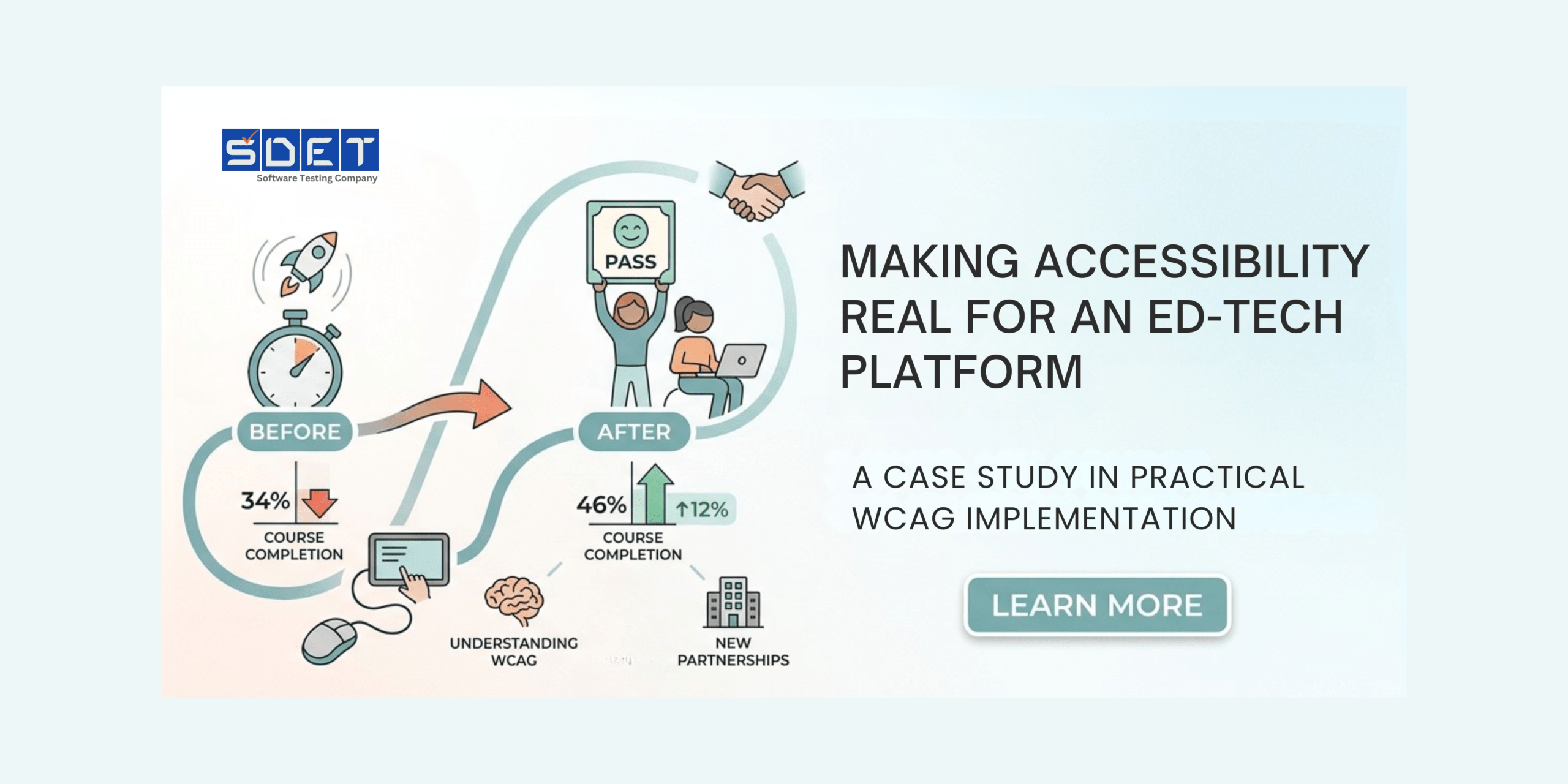
- 34% → 46% course completion rate for students with disabilities
- +10% overall user satisfaction (turns out everyone benefits from better design)
- –20% reduction in support tickets
- Met legal requirements and gained new school partnerships
What We Learned Internally: WCAG Compliance Testing and Accessibility Insights
Our own team leveled up too through this accessibility testing engagement:
- Developed more empathy for actual user struggles
- Stopped treating WCAG like a video game score
- Became better at spotting what really matters
- Built a stronger overall inclusive practice
From Compliance to Real User Impact: The Value of Continuous Accessibility Testing
True inclusion isn’t about passing audits. It’s about building products that real people can actually use. This project turned compliance panic into genuine product improvement—and built trust for the long haul. Effective accessibility testing made all the difference.
Ready to move beyond checklists and make your digital products work for everyone? Contact us for a comprehensive accessibility testing consultation.